Drain System
Protection &
Maintenance
THE HIDDEN RISK OF FOG IN YOUR DRAINS.
Fats, oils, and grease (FOG) can create significant challenges throughout wastewater systems. From restaurants and food service operations to apartment communities, senior living facilities, HOA-managed properties, institutional campuses, and industrial facilities, FOG buildup can restrict flow, impact system performance, and lead to costly maintenance issues.
As grease accumulates within drain lines and connected infrastructure, facilities may experience blocked drains, wastewater backups, foul odors, increased maintenance demands, and compliance concerns. Proactive drain system maintenance helps protect wastewater infrastructure, support operational reliability, and reduce the risk of costly disruptions.
FOG buildup occurs when fats, oils, and grease accumulate within drain lines, grease interceptors, and wastewater infrastructure. Over time, this buildup can restrict flow, reduce system efficiency, and increase the likelihood of operational issues.
If not properly managed, FOG accumulation can lead to:
• Blocked drain lines
• Wastewater backups
• Foul odors
• Increased maintenance costs
• Infrastructure deterioration
• Compliance issues and fines
A SMARTER APPROACH TO FOG MANAGEMENT
FOG Control Solution takes a proactive approach to wastewater system management. By helping prevent grease accumulation, supporting continuous flow, and protecting critical infrastructure, organizations can reduce maintenance demands, improve system performance, and minimize operational risk.
Cost Savings
Proactive FOG management helps reduce emergency service calls, costly repairs, equipment strain, and unplanned maintenance expenses.
Wastewater System Protection
Supporting drain lines, grease interceptors, and connected infrastructure helps maintain system performance and extend the life of critical assets.
Environmental Compliance
Proper FOG management helps facilities meet local wastewater requirements while reducing environmental risk and supporting responsible operations.
Sustainability
Naturally derived, plant-based solutions provide an environmentally responsible alternative to harsh chemical treatments.
Operational Reliability
Reducing grease accumulation helps minimize odors, backups, service interruptions, and other issues that can impact daily operations.
HOW FOG DRAIN CLEANING WORKS
Supporting Cleaner, More Reliable Wastewater Systems
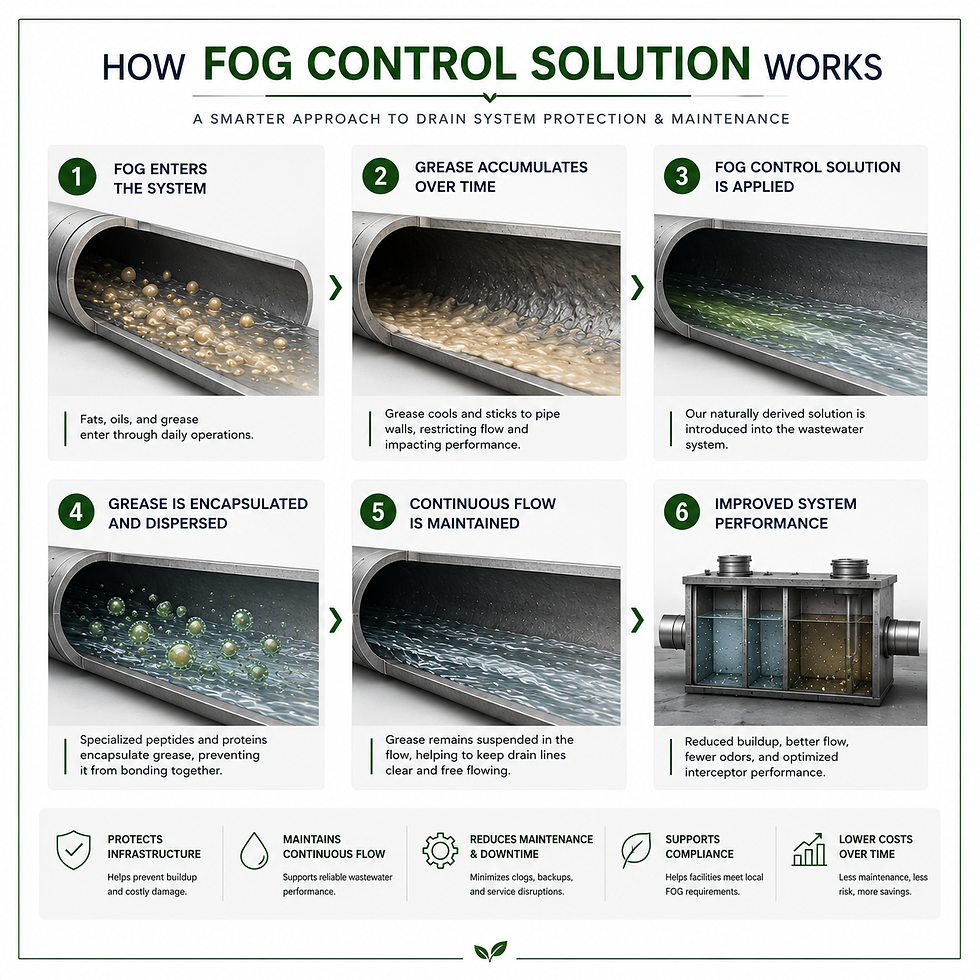
FOG Control Solution follows a proactive approach to wastewater system management that helps reduce grease accumulation, support continuous flow, and protect critical infrastructure. Rather than simply addressing existing buildup, the process is designed to help prevent future issues while improving overall system performance.
System Assessment & Evaluation
Every facility has unique operational demands. The process begins with an evaluation of drain lines, grease interceptors, and wastewater infrastructure to identify areas where fats, oils, and grease may be impacting flow, performance, or maintenance requirements.
Molecular FOG Management
FOG Control Solution utilizes naturally derived amino peptides and proteins that interact with fats, oils, and grease at the molecular level. The solution encapsulates grease molecules, helping prevent them from bonding together and accumulating within drain lines, grease interceptors, and connected wastewater infrastructure.
By supporting continuous flow and reducing grease accumulation, facilities can improve wastewater system performance while minimizing odors, maintenance concerns, and operational disruptions.
Ongoing System Protection
Long-term success requires ongoing attention to wastewater system health. Routine maintenance programs help support drain line performance, grease interceptor efficiency, and overall system reliability. This proactive approach reduces the risk of backups, costly repairs, and service interruptions while helping protect valuable infrastructure.
This preventative approach helps organizations reduce emergency maintenance events, improve wastewater system performance, and protect critical infrastructure over the long term.